Logo oficial THYDOMTHYDOMTHYDOM.COM
Sign inRegister free
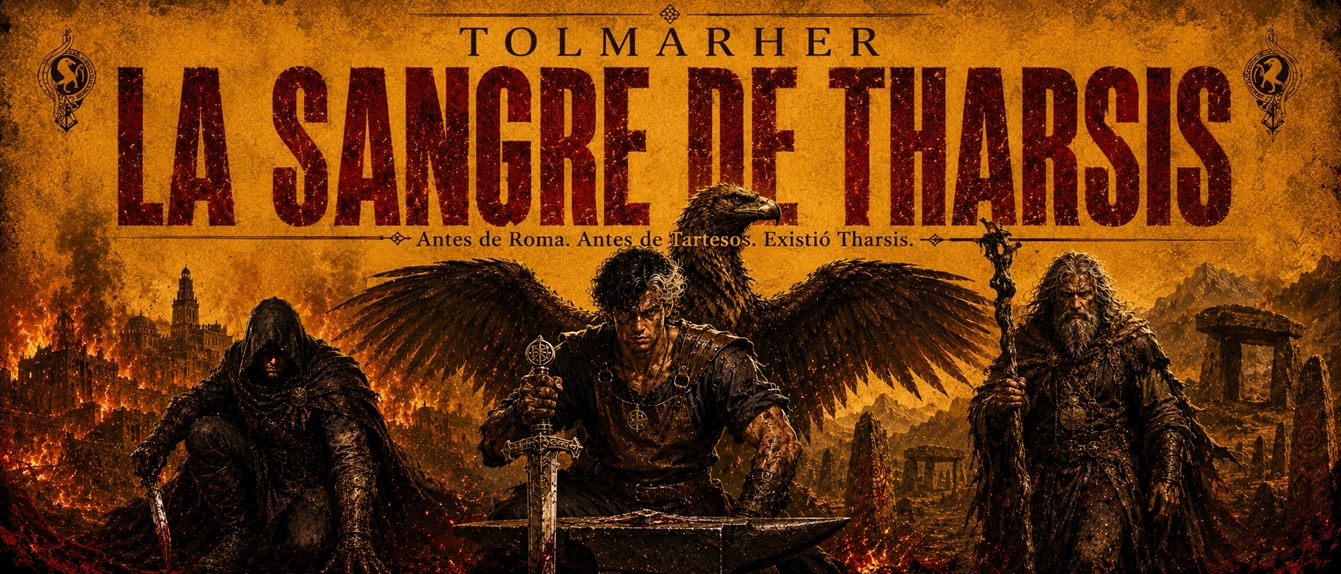
Header image for the series The Blood of Tharsis

Editorial series

The Blood of Tharsis

Ongoing series · New installments on the way

4-book series

RuneEpic Fantasy
by Tolmarher Author
4.99 70 ratings
Web reading
Start the series

About this series

The Blood of Tharsis is a saga of dark epic high fantasy about a civilization that still bleeds for a drowned homeland. Centuries ago, Argantia—the circular island of the ancient Atlanteans—vanished beneath the Western Sea. Its survivors raised round cities, silver temples, and dolmens of living stone in Tharsis, but they never fully buried what they had lost. In the outskirts of the great city, Arhan works as a blacksmith, unaware that his blood carries a legacy capable of shattering kingdoms. He is nineteen years old, with a silver streak at his temple and dreams of an upright sword beneath black waters. When King Arghas II dies, the court opens like a wound: the legitimate heir is weak, Queen Khadissa moves her pieces from the shadows, the Kenarites smile from the front row, and the Atlantean houses begin counting swords. But Arhan knows nothing of thrones or gods. He knows only that two cold-eyed men have arrived in the outskirts asking for him. They are not soldiers. They are not thieves. They are a queen's assassins, sent by a woman who fears the blood of a boy raised among coal, iron, and smoke. At the heart of destiny waits Kalibar, the orichalcum sword of the ancient kings. It grants no power without a price: once drawn, it must drink blood—or drink the life of the one who wields it. The Blood of Tharsis is the chronicle of a hunted bastard, a rotten crown, noble houses that swear honor while sharpening knives, and gods who may not be so different from the shadows they claim to fight. In Tharsis, blood remembers, stones listen, and the dead do not always rest beneath the sea.

Tolmarher
Tolmarher Author
Follow

Books in this series

4 books

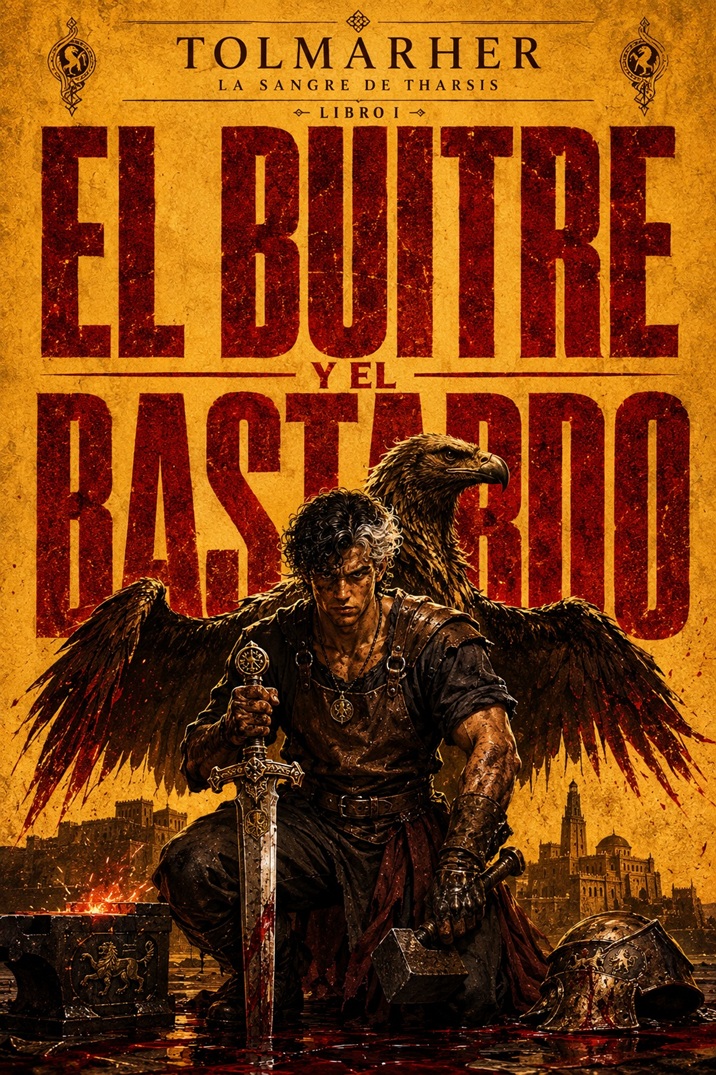
Cover of The Vulture and the Bastard
Book 1

The Vulture and the Bastard

4.6161 ratings
Web reading

The Vulture and the Bastard open the Blood of Tharsis with the birth of an omen. In Tharsis's arrabal, far from the marbles of the palace and the rotten oath of nobility, Arhan lives as a blacksmith's apprentice under the protection of Orthon, the man who brought him up as his son. He's nineteen, fragua's hands and a closed look and a silver stick on his left temple that nobody's been able to explain to him. To him, the world ends up with an anvil, with hot iron and with the streets where the common survive without asking about the affairs of the kings. But the death of Arghas II cuts the foundations of Tharsis. While the kingdom contains his breath and noble houses start to count swords, rumors and bastards, a silver moon rises up onto the circular town as if old gods had been looking back at men. On the rooftops of the arrabal, a leonado vulture waits. No pounding. He doesn't fly. Just watch, as if I have known the name of the dead man who's been put to death. When the men at Khadur House come to the low neighborhood asking about the blacksmith, Arhan understands something has been broken forever. They are no tiddddddddddddddddddddddddddddddddddddddddddddddddddddddddddddddddddddddddddddddddddddddddddddddddddddddddddddddddddddddddddddddddddddddddddddddddddddddddddddddddddddddddddddddddddddddddddddddddddddddddddddddddddddddddddddddddddddddddddddddddddddddddddddThey seek an impossible boy, a secret bastard of the dead king, a threat born before the new throne can settle. Orthon lies to protect him. Arhan's been watching from far. And for the first time, she understands that his simple life was perhaps never his. While Tharvan, a legitimate son of Arghas II, goes up to a crown that weighs more than a wet armor, Queen Khadissa moves her pieces with cold patience. Behind her are the Khadur, Orient, dark altars and an ambition that will not be conformed to govern Tharsis: she wants to re-govern them. The atlant houses shut up, figure or tremble. The old lineage remember the fall of Argantia, though they no longer know how to distinguish memory from curse. Amidst that intrigue, Arhan remains unaware of his true birth. He doesn't know his blood condemns him and elevates him. He ignores that his name, still hidden, can set fire to the kingdom. And she ignores that somewhere in the past Kalibar sleeps, the oricelk's sword coming from the sunken days of Argantia, a living relic that doesn't forgive whoever wants her so much. The Vulture and the Bastard is the story of a broken innocence, a stained crown before they touch a front and a boy that starts to be chased before they even know who she is. At Tharsis, blood doesn't forget. The stones listen. And as soon as the vulture waits on the roof, it's because fate has already begun to eat.
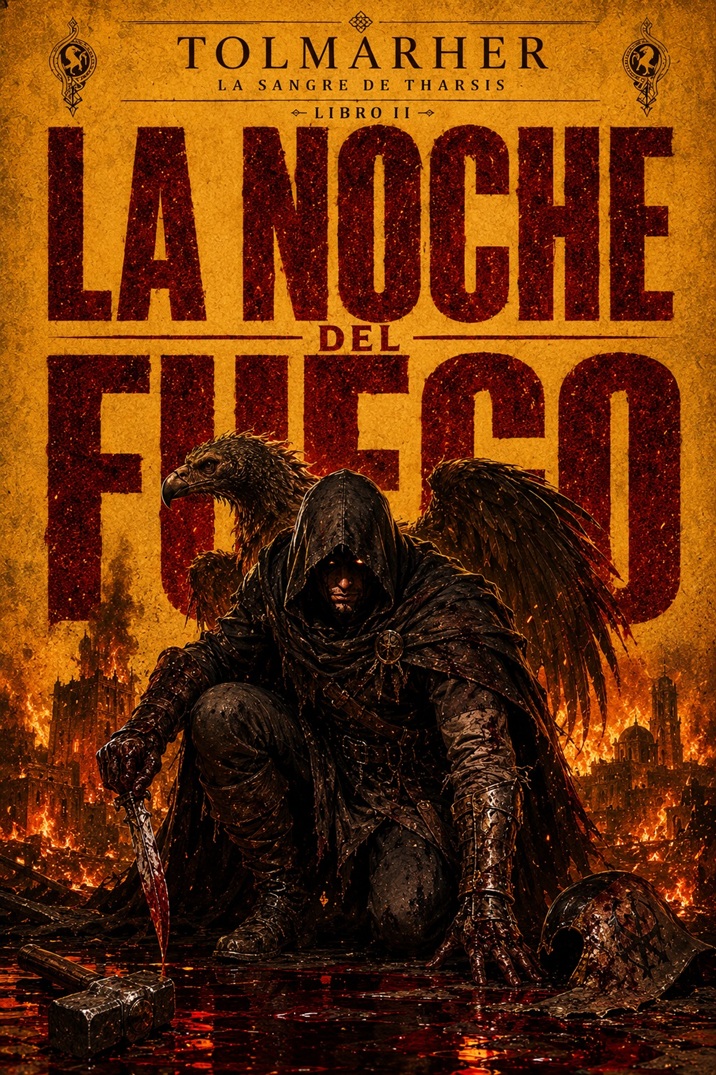
Cover of The Night of Fire
Book 2

The Night of Fire

4.8955 ratings
Web reading

The death of King Arghas II has opened a crack at Tharsis, and the queen's men have already begun to seek the names to be lost. At the arrabal, Orthon understands too late that his fragua's door has been found by his past. Nineteen years ago, a rainy night, Hessur the Gris gave him a newborn, a silver bag and a single order: that the child never knew where he came from. Orthon accepted that alien fate because he wished for a child and for nearly two decades he loved Arhan as his own blood, while knowing that some day his lie could bring knives to his house. That day arrives as two Khadur House killers. The frage burns at night, Orthon and Meira fall into the mud, Bras disappears by the rooftops and Arhan, put up by a fury that he doesn't understand, first kills with his father's hammer. There's no glory in that act, just smoke, blood, guilt and the complete collapse of his life. Rejected among the alleyways of Tharsis, Arhan looks after his brother without finding him, chased by his dead parents and by his killed man's face. Before dawn, at the port, Hessur the Gris found him, the old man who knows his name, his hidden origin and why Khadur's men will continue to seek him. Arhan doesn't trust him, she doesn't forgive him and she doesn't want to hear promises of fate and blood. He wants revenge. But Hessur warns him that revenge is precisely the trap his enemies are expecting. Without a house, with no parents, without knowing whether Bras lives or has been killed, Arhan abandons Tharsis by the gates of the north with the grey man. He does so by faith and obedience, but because his path remains. The fragua, fire and childhood are behind them. The dylms, the truth of his blood and a war that doesn't know his name yet await before them.

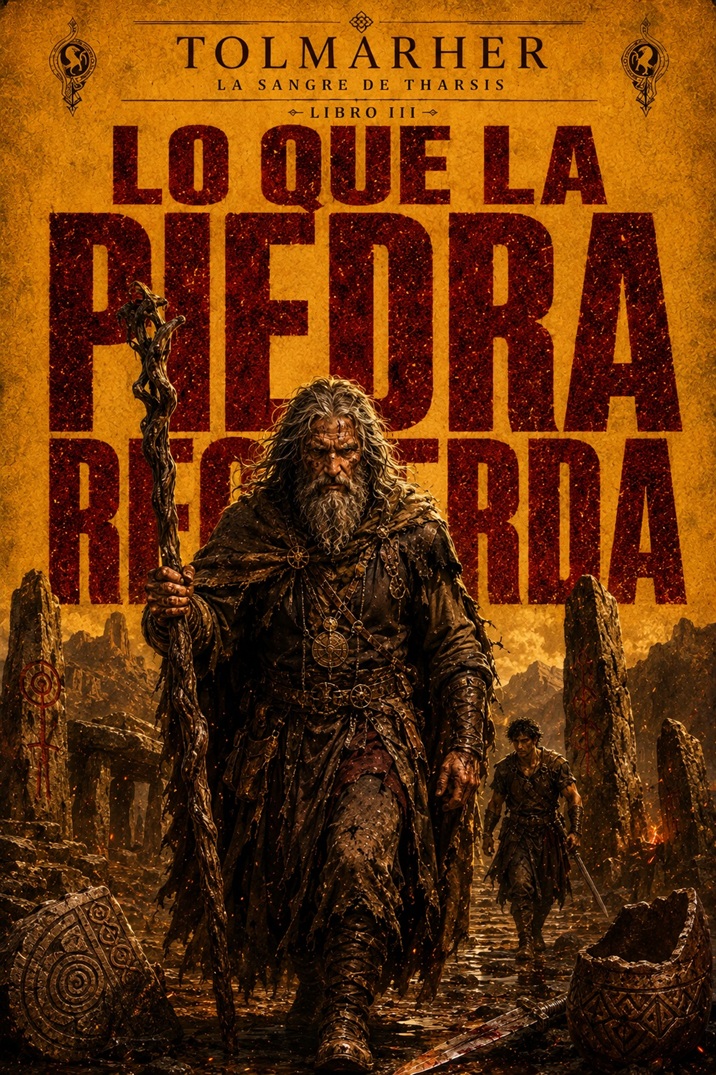
Cover of What the Stone Remember
Book 3

What the Stone Remember

4.9852 ratings
Web reading

Arhan has left Tharsis behind, but his fire isn't. Following the death of Orthon and Meira, the disappearance of Bras and the escape of Khadur's men, the boy leaves the gates of the north with Hessur the Gris, without believing him and without yet accepting that his life belongs to a much older plot than his own blood. The path leads to the lands of Casa Naur, where the cities smell of wet stone, cold iron and old sacrifice. That's where, far from the noise of the capital, Arhan first looks after Tharsis from outside and discover the circular form of his walls, a reflection of an older wound: Argantia, an island that's been sunk from the atlanes, and his fall keeps beating under the memory of all the peoples of the West. Between hills and fog and old north roads, HesSouth leads Arhan to his first dole. What happens there isn't about the priests' accounts or about the fables of the arrabal. No glorious lights or gods coming down from heaven. Just a hand onto the stone, a slow pulse under the ground and the disturbing certainty that something very old recognizes it. In Nabrissa, a circular town more old and more severe than Tharsis, Arhan knows Velra Naur, a matriarch of a house that offers no tenderness or promise. Velra sees in him a boy broken by pain but a valuable, dangerous and perhaps necessary creature. While HesSouth and Velra negotiate their fate as if they were a piece on a stone table, Arhan understands that their name, blood and dreams can attract far worse enemies than those killed at night of fire. But Velra needs to know more. Alone at the sanctuary of Nabrissa's dills, open his palm and give blood to the stone to confirm his fear. Magic isn't beautiful and pious: it requires cost, silence and obedience. What the stone shows her disrupts sufficiently to shut her up even before HesSouth. Arhan still doesn't know who she is. But the stones start to remember. And as the rock realizes, prudent men learn to be afraid.

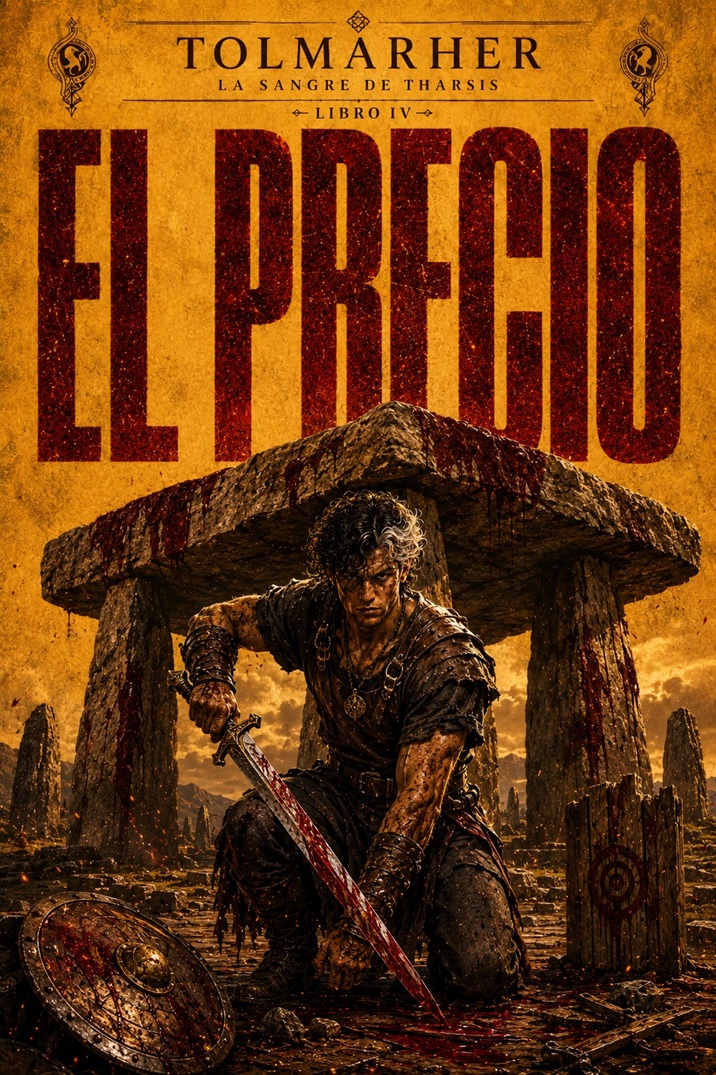
Cover of The Price
Book 4

The Price

4.5046 ratings
Web reading

Arhan can no longer pretend that his life belongs only to the forge. After Orthon and Meira's deaths, Bras's disappearance, and his own flight north, Hessur the Grey reveals the truth buried beneath nineteen years of silence: Arhan is the bastard son of King Arghas II. He is no acknowledged heir, no prince raised to rule, and no hero eager to claim a crown. He is something far more dangerous: blood out of place, a political possibility, a living threat to those who need the succession of Tharsis to remain untainted. But every truth has a price. In Nabrissa, under Velra Naur's stern gaze, Arhan accepts sanctuary and training. In return, he must work at the dolmen sanctuary, attend ancient rites, and learn that stone is not mute, that blood awakens memories, and that the magic of the old peoples never grants anything without demanding payment. Amid blows, shields, ash, and sacrifice, the blacksmith's son begins to understand that survival is not enough: if he does not learn to see, others will see for him; if he does not learn to bear his name, others will use it as a banner—or bury it as a threat. Meanwhile, in Tharsis, the new king, Tharvan, struggles to hold the Atlantean League together. The Velkar demand clarity about the succession and Kalibar, the sword of kings. The Onhur weigh routes and treaties. The Ithara proclaim troubling omens. The Naur remain silent. The Brenthos do not even attend. The League still stands, but only in appearance: every house is a knife waiting for another to move first. And at the heart of that fractured court, Khadissa smiles. The queen secretly descends into the temple of Ashtara, hidden beneath a Kenarite trading house, and offers her own blood in exchange for guidance in the night. Her faith is no political mask: it is real, cold, and absolute. There she understands that Arhan must not be attacked directly. First Bras must be found. First the houses must be set against one another. First Nabrissa must be made so visible that Velra is forced to move the piece she is protecting. The Price opens a new phase in The Blood of Tharsis: the revelation of the bastard, the beginning of his training, the fracture of the Atlantean League, and the awakening of religious powers operating beneath visible history. Because in Tharsis, nothing is given freely. Not blood. Not truth. Not destiny.