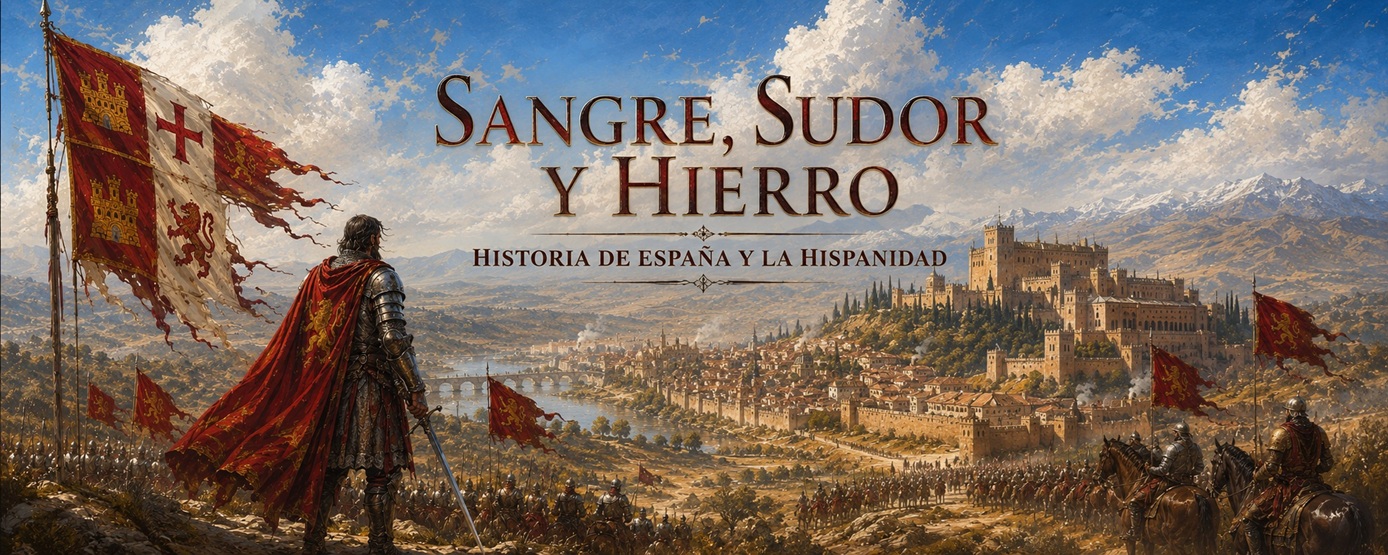
Blood, sweat and iron There are men born to inherit a kingdom. Others are born to conquer him.Blood, sweat and ironIt's a series of historic novel that goes through some of the most decisive and ruthless episodes of Spanish and Mediterranean history. From the wars of the Antiquity to the dusk of Al-Ándalus, from the campaigns of the Tercios to the asedics that changed Europe, each novel brings the reader to the heart of an age where steel decided the fate of kings, empires and civilizations. With an epic, cinematic and deeply human style, the series combines historic rigor, memorable characters, great battles, conspirations, love, treason and sacrifice. They are not only novels about war but about people forced to survive in a world where honor had a price and victory always required blood, sweat and iron. A collection intended for lovers of the great historic novel who wish to live History from within with all its grandeur and all its brutality.
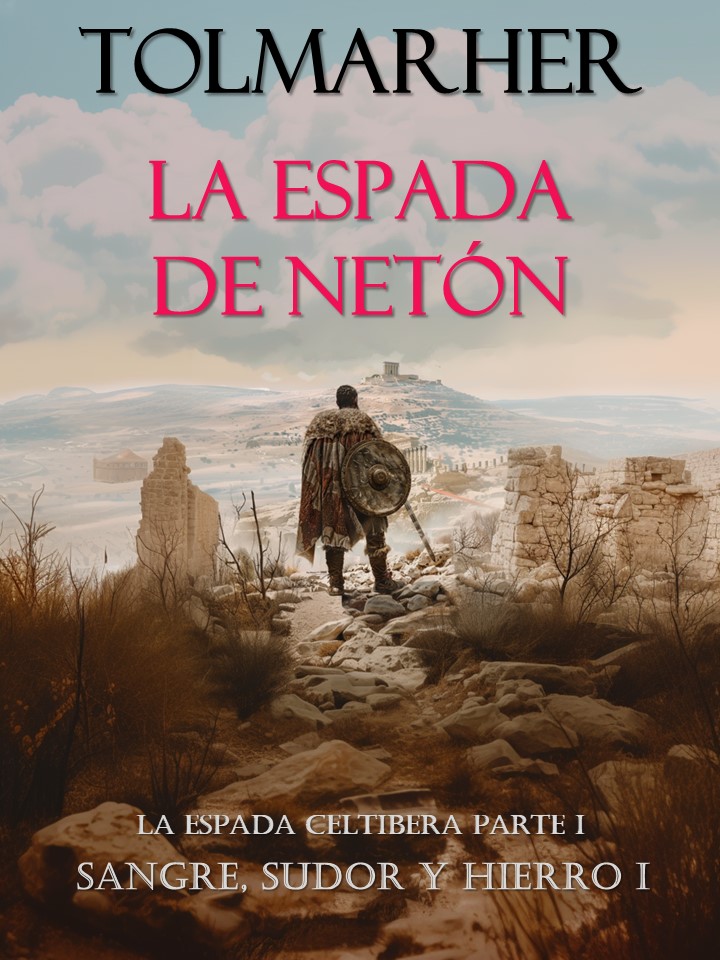
The Celtibe Sword, first part.
"It's not the edge of the swords, they're the hearts that hold them and those that achieve victory" - TOLMARHER
The Neton Sword is the first performance of the series "The Celtibera Sword." In an ancient Hispania, before the glory of Rome covered the peninsula with its banners, the fight for freedom already burned with its inhabitants. The Celtibera Sword carries you to a ground where forests were divine shrines, the mountains were lifted up as impenetrable fortresses, and a god's sword marked man's destiny.
The saga begins with the legends of old warlords who challenged the imperial power, warriors who planted the seeds of resistance. Among these echoes of the past, Viriato emerges, a humble Lusian shepherd intended to become Rome's most feared enemy. Guided by the will of the god Neton and bearing a mythical sword, Viriato will lead the Celtiere tribes in a rebellion that will shattering the greatest empire in history. Betrayments, alliances, loves and battles intertwine with an epoxy that embraces generations, facing men against gods and peoples against empires. The Celtibe Sword is the story of an indomitable people who fought with fury and honor, leaving an eternal legacy of resistance and freedom.
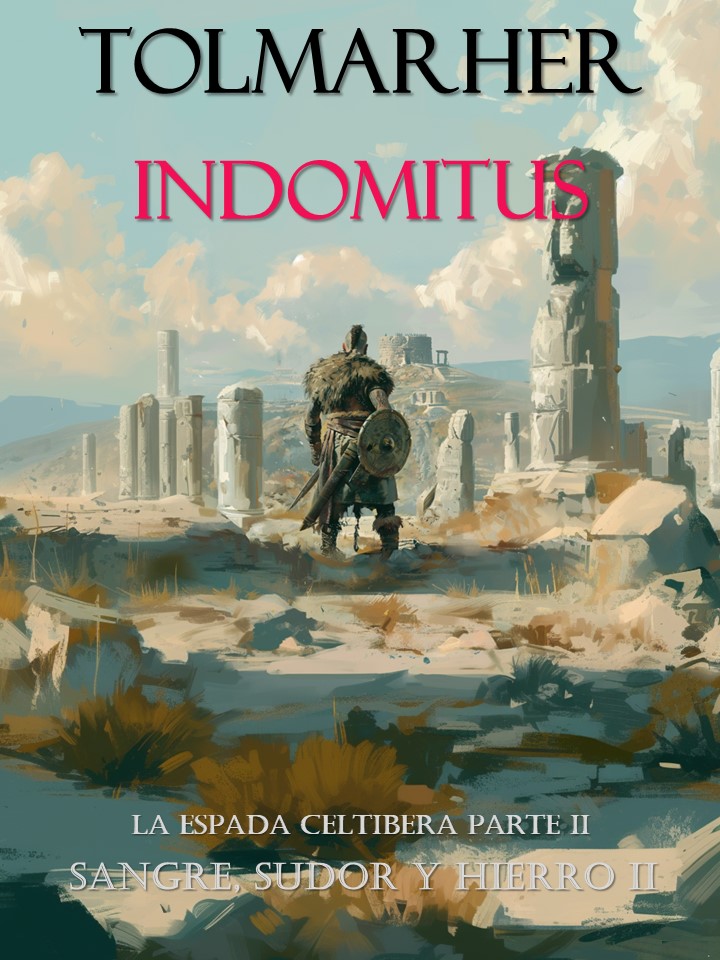
The Celtibe Sword, second part.
"It's not the edge of the swords, they're the hearts that hold them and those that achieve victory" - TOLMARHER
Indomitus is the second performance of the series "The Celtibe Sword." In an ancient Hispania, before the glory of Rome covered the peninsula with its banners, the fight for freedom already burned with its inhabitants. The Celtibera Sword carries you to a ground where forests were divine shrines, the mountains were lifted up as impenetrable fortresses, and a god's sword marked man's destiny. The saga begins with the legends of old warlords who challenged the imperial power, warriors who planted the seeds of resistance. Among these echoes of the past, Viriato emerges, a humble Lusian shepherd intended to become Rome's most feared enemy. Guided by the will of the god Neton and bearing a mythical sword, Viriato will lead the Celtiere tribes in a rebellion that will shattering the greatest empire in history. Betrayments, alliances, loves and battles intertwine with an epoxy that embraces generations, facing men against gods and peoples against empires. The Celtibe Sword is the story of an indomitable people who fought with fury and honor, leaving an eternal legacy of resistance and freedom.
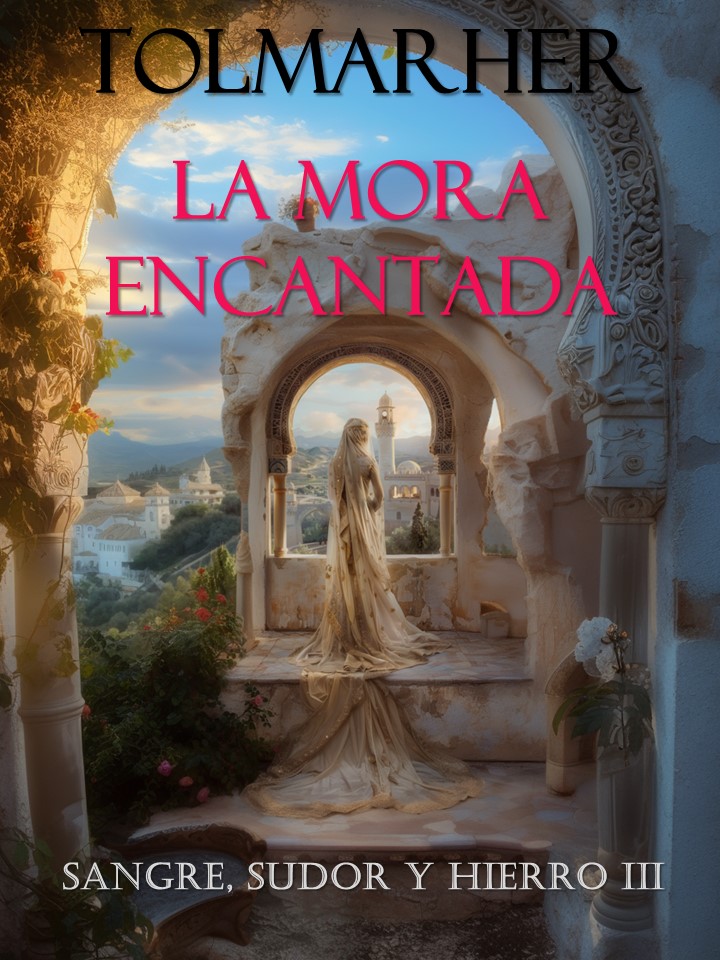
A story of impossible love, treason and war at the wildest border of Castile.
In Castile of the twelfth century, where steel and word seal destinations, a young gentleman with noble lineage, Don Rodrigo de Pastrana, was sent to the fortress of Sorita to serve under the command of veteran Captain Don Alvar Fáñez. There, between the tensions of a living border and the ambition of noble Rivals, Rodrigo discovers a prison carved onto the rock where a mysterious dwelt princess sings every night with a full moon.
His voice bewitches. Her look breaks centuries of hate. And his love awakes old pacts that neither the cross nor the half moon can afford.
While the kingdoms of Castile and Al-Ándalus are preparing for a new holy war, Rodrigo and the princess challenges kings, creeds and armies. But at border ground, no oath is holy, and treason lurks under the same walls that promise honor.
Inspired by a true legend of the heart of the Alcarria - still living in the memory of pastors and growers - this novel intertwines historic events with a passion so powerful that centuries, religion and death pass by. From the Zorita's moors to Iuliana's hidden caves, each page breathes powder, blood and hope.
Because there's love that burns beyond time.
And there are names that only the moon remembers.
"That book is dedicated to the slave who consumed his life in the shadows of oblivion, to an unknown soldier who found death by his general's ambition. But first and foremost, it's dedicated to all those who, regardless of age, earth and price, gave up their existence for defending their freedom."
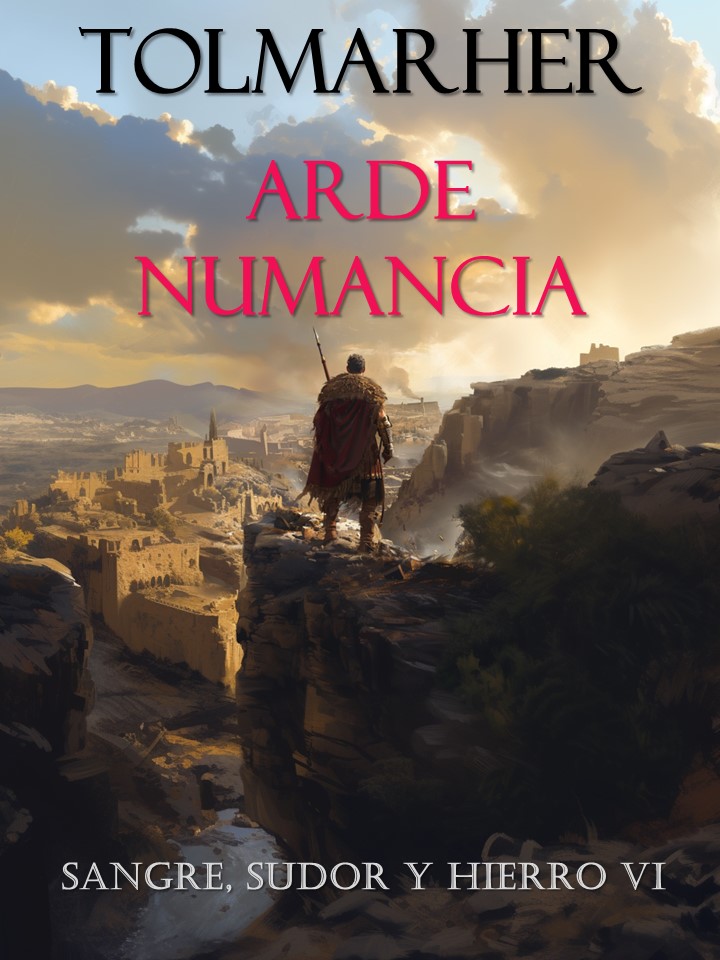
"Arde Numancia" unfolds as an exciting chronic, submerging itself into the depths of one of the most tumultuous periods of Hispania: the beginning of the Roman conquest after the Punic Wars. That historic novel brings the reader to a time at which the freedom of the Celtibers pits with a thread before the relentless advance of Rome. The narrative focuses on Numancia's heroic resistance, narrating the rise from the perspective of a range of beesight and Aravac warriors. Those characters, loaded with courage and hope, are drawn to a destination marked by war and tragedy. From the beginning of the conflict at Segeda, passing through the victory of Charos at Vulcania, to the fall of the mythical Numance at the hands of Publio Cornelio Scipion, history unfolds as a tapestry of war, passion and ambition. "Arde Numancia" is an emotional and vibrant journey that with mastery rebuilds a people's fight for his freedom. The novel goes beyond time to show that the search for liberty is a universal and timeless feeling, as important today as it was two thousand years ago. With a master mix of historic facts and narrative fiction, "Arde Numancia" is not only a window to the past but also a mirror that reflects contemporary struggles for autonomy and dignity. That work did not only pay tribute to the courage and sacrifice of a people but also called for reflection on human nature and its relentless fight for freedom and justice.
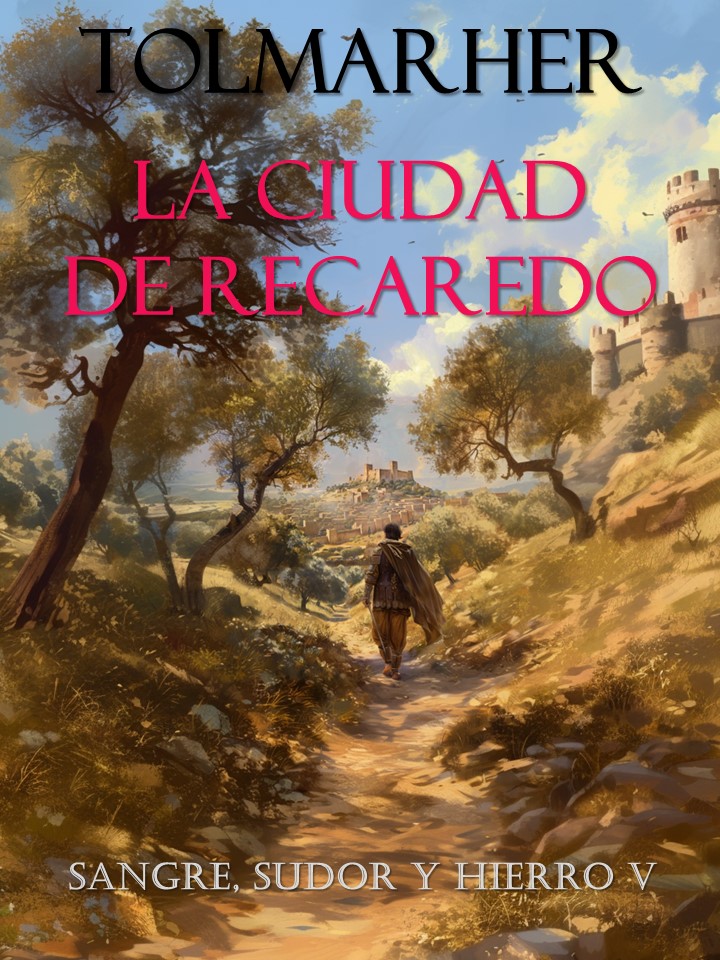
In a convulsed and divided Hispania, after the fall of the Roman Empire of the West, the foundations of a new nation begin to be forged among palacic intrigues, fratricidal wars and the collation of two opposing Fes.
Hispania, 6th century, brings us to the turbulent reign of Leovigilance, a Visigoous monarch determined to consolidate its power onto an still fragmented peninsula. His ambition leads him to have found a monumental city for his Rebedo son, a symbol of unity and dynastic continuity. But in the shadows of the throne, the rebellious spirit of Hermenegildo, the first-born of the king, awoke and challenges the dominant Arrian faith and puts into check the fragile balance of the kingdom.
Between fanaticism and reason, between warrior honor and imperial ambition, an epic drama develops where human passions model history. With a powerful and strict narrative style, the novel intertwines true facts with historic fiction, submerting the reader into Visigoda Hispania as rarely counted: brutal, beautiful and tragic.
Instead of an account of subsequent disputes, this work is a meditation about a people's faith, power and destiny. Through their characters - kings, monks, warriors and maids - we reveal the fragility of alliances, the strength of conviction and the price of treason.
Hispania, 6th century, is an indispensable work for those who seek to understand the origins of Hispanic identity at a time where the future of an entire civilization was about the will of a few men and of the designs of heaven.
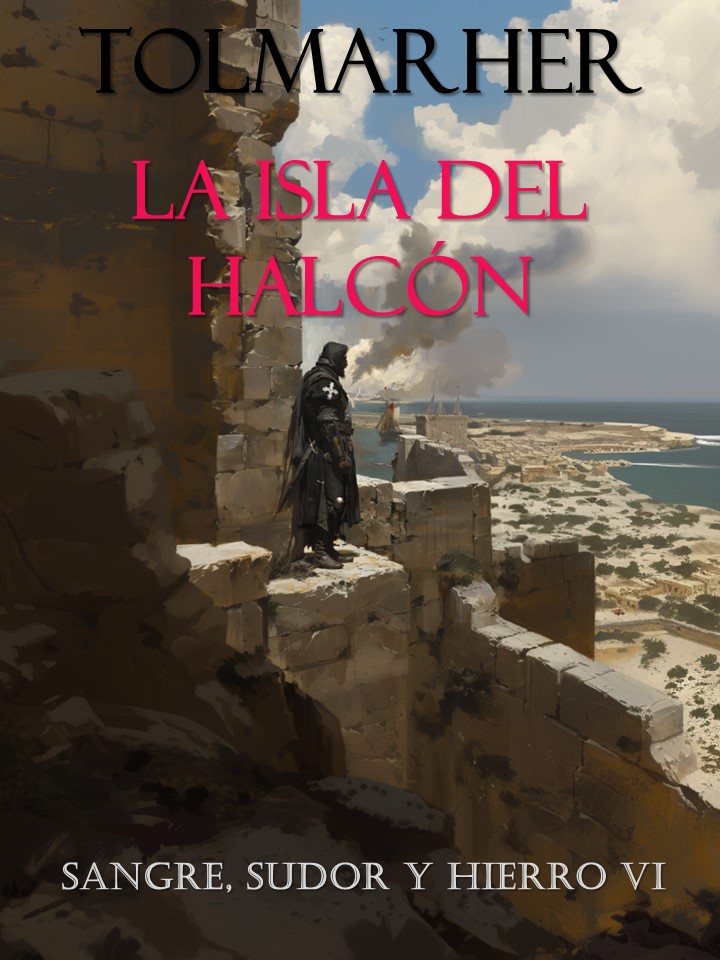
The Island of the Falcon: The Great Site of Malta
A novel of war, honor and impossible love at the heart of the Mediterranean
Malta, 1565. At the crossroads of empires, a small island became the last beacon of Christianity before the greatest military force in the known world. The Ottoman Empire, with a colossal fleet and more than thirty thousand soldiers, launched its final offensive to submit to the Order of St. John. But the Hospitalists, tipped up in centuries of combat and guided by an unbroken code of honor, decide to resist.
While the walls of St. Telmo are dyed with blood and the waters of the Mediterranean are burning under the fire of the canyons, the true stories that shape the epoxy emerge: Sancho Daudén, a youth marked by tragedy and guilt, struggles to find redemption after losing his beloved Fatima. Geovani Casiraghi, a cynical sergeant and wounded by the past, discover an unexpected flash of humanity at Isabella Sberna, a woman trapped between duty and destiny.
Through his eyes, the reader will live the hell of the siege, the glory of sacrifice and the strength of love even in the darkest days. That isn't just a historic novel. It's a tribute to courage, faith and flame that remains light when everything looks lost.
The Island of Falcon is a vibrant and deeply human work that tells about one of the most overwhelming episodes of universal history. With unforgettable characters, stressful scenes and a strict and lyrical atmosphere, this novel doesn't only recite Malta's Great Site: it makes it an experience that the reader will never forget.
Dig into one of the most fascinating epoapies in history.
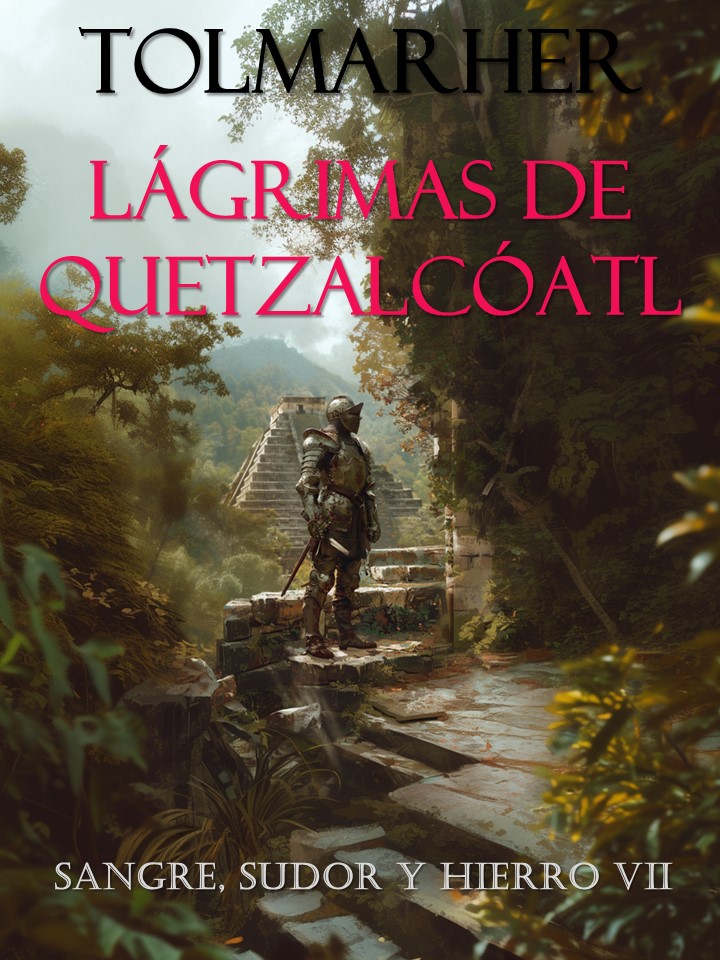
The Tears of QuetzAlcoatl is a vivid account of love, betrayal and conquest that brings us to the heart of the turbulent encounter between two worlds: the Aztec Empire and Spanish adventurers led by Hernan Cortés. Through a landscape of embodying wars, prohibited passions and heroic gestures, this novel follows Cortés in his disproportionate ambition to achieve glory and gold. From the bright coasts of the Caribbean, crossing the profound forests of Yucatan to the imposing town of Tenochtitlan, ruled by the majestic Moctezuma, Cortés and his men face challenges that will put their wit and their determination to the test. Amid this voracle, an impossible love emerges between Spanish Captain and Malintzin, an indigenous princess trapped between loyalty to his people and devotion to man that will change his destiny forever.
With a captivating style and an atmosphere that recites with historic precision the days of the Conquist, Tears of quetzAlcoatl will immerse you in a whirlwind of emotions, where survival, ambition and tragedy converge to give life to an unforgettable story. Do you dare to discover the birth of a new nation and the forging of a legend that changed the course of mankind?
"You without Us"
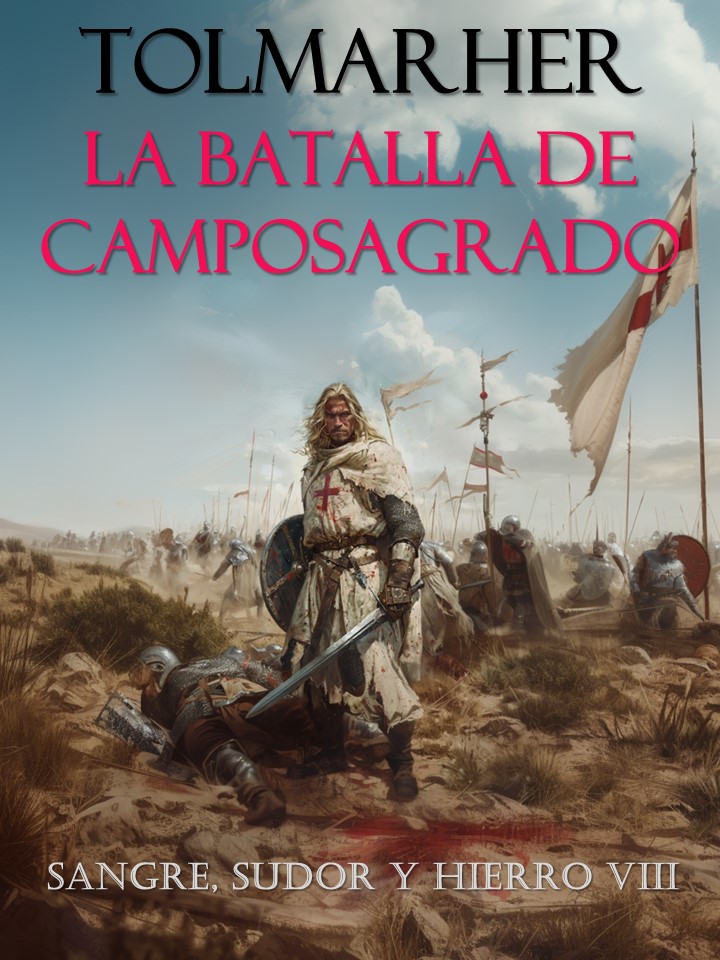
Campospadre: The earth consecrated by blood
There was a time when the echo of old gestures still resound in the mountains and the future of a town lay at the edge of a few swords.
Following the fall of the Visigodo Kingdom and the ruin of Guadalete, while Hispania seemed doomed to disappear under the weight of the invader, a handful of men refused to surrender. At the high lands of Lion, where the valleys slept under the fog and old gods seemed to have been retreated, a silent battle was waged, forgotten in the books but written with fire on the ground itself.
No trumpets. No crowns. There was mud, there was blood, there was ashes. And in the midst of his abandonment, as King Pelayo was unable to come with his help, Captain Colinas and his men have put their burden on his shoulders.
And they beat.
No more shield but faith. No more reward but his people's lives. No more witness but heaven and the earth that was consecrated from that day.
From that gesture came the cry of "Thou without Us," an oath without pompous and clergy, that founded a humble but indomitable tipple: the Tusinos. Men without palace, but with tower, without title, but with dignity, without promise, but with an everlasting word.
That's the story of Campospadre: a death camp that became an altar, a corner of the world where the will of the forgotten built the future of a kingdom.
That whoever reads these pages will never forget that there are victories that are crowned with gold but with blood. And that there are lands that are not achieved but redeemed.
Voices and echoes lost in time...
At a time when the young Kingdom of Asturias was barely a handful of valleys isolated from fog and despair, Spanish history was about to be broken forever.
Following the fall of the Visigodo Kingdom at the fatal battle of Guadalete and in the years of lead that followed, a man called Pelayo came up and lifted his banner at Covadonga and opened a path of resistance against the invading tide. Nevertheless, survival of that fragile kingdom was not the work of a single man or of a single battle.
In the high lands of León, in a forgotten corner between rivers, rivers and forests, the destinations re-crossed their steels. Camposamus was the stage of a desperate fight, where Christians, outnumbered and outnumbered, faced the enemy with the sole force of his determination. That's where Captain Colinas, with his king's absence, assumed the weight of his kingdom on his shoulders.
No crowns. No promise. No hope.
The battle was not just a military victory: it was an act of faith and blood that consecrated the earth itself. From it came the cry of "Thou without Us," and with him the Tusinos, a line of men forged into the mud of defeat and iron of resistance.
That novel rescates from oblivion that decisive day, honoring men who did not demand glory but deserved memory. It's an account of mud, blood and ashes, where heroin isn't measured by crowns but by the will to fight for what doesn't exist.
"Campospadre" is more than a story of swords and banners: it's a will to the dignity of the forgotten. A singing to the living memory that still resists in the fields, in the lonely towers and in the wind that never stops whispering old names.
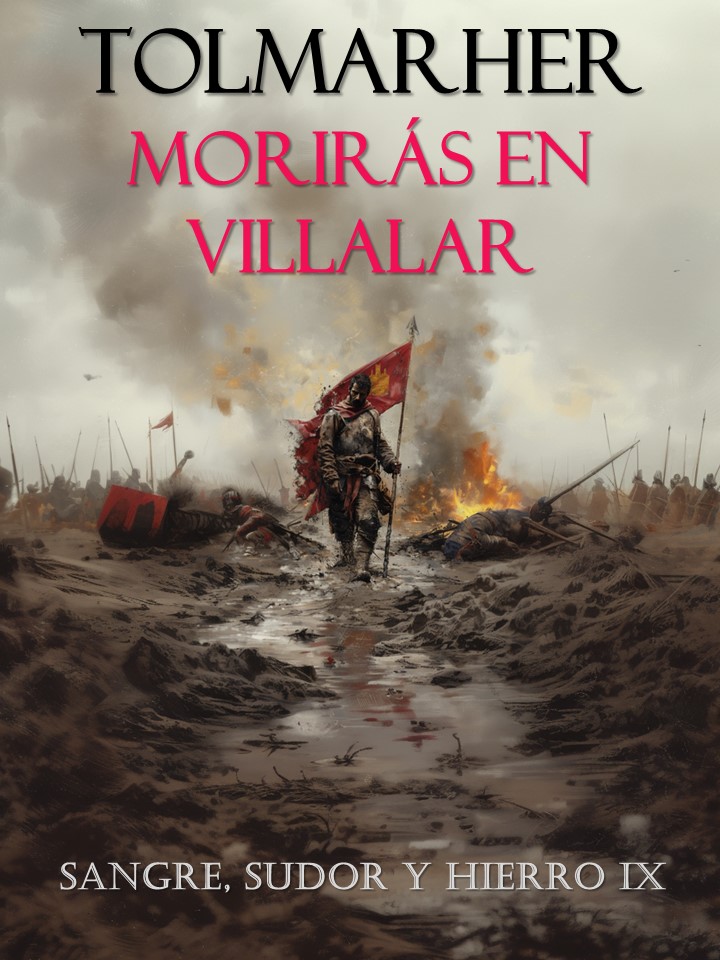
"You'll die in Villalar"
Ninth surrender of historic saga "Blood, sweat and iron"
At the pitiful heart of Castile, while the kingdoms were still trembling under the shadow of emperors, a short but immortal flame arose: the revolt of the Communities. You'll die in Villalar isn't just a historic novel. It's an honor song, an election by men and women who put their voices up against oblivion and paid with their lives the price of dignity.
Environmented in the convulsed days from 1520 to 1521, this choral novel gives a voice to the most iconic protagonists of that rebellion: Juan Bravo, a segovian captain with a firm and straight look and a straight step, Juan de Padilla, a noble Toledan, a warrior for justice and not for glory, and Francisco Maldonado, a salmantine hydsomething, brave till the last moment. His trajectories converge into the field of Villalar, where his history was written with blood and mud.
To his side stands Mary pacheco, last common and an eternal symbol of resistance. The novel found its feminine and tragic backbone. He's not just his killed captain's wife: she's a strategist, a strong voice, a woman who challenges power from the walls of Toledo to his final exile in Portugal. His figure embodies the spirit of every woman that did not accept to be silent.
The work also gives space to the young and still cold Charles I of Spain, an emperor who looks at the world from Flanders and later from his golden throne, without fully understanding the earth he inherited. Through his thoughts and dialogues, we discover the monarch that with the years will be great but that was still alien to Spanish suffering.
And in shadows, Juana I appears, mother and queen locked up, silent but lucid. His refusal to support the Communists - out of loyalty to his child - and his loneliness call for the ghosts of truncated betrayal and love. His figure becomes an opaque lighthouse, impossible to ignore.
Finally, an antagonist emerges: Iñigo Fernández de Velasco, Condestado de Castilla. Ambitious, calculator with his look at his promise of his golden Toison. To him, Castile isn't a land but an opportunity. His march to Villalar is that of a wolf that smells reward.
The novel culminates with the battle of Villalar, described with crudeness and solemnity: fog, mud, drums and spears give shape to an impossible scene. But the story doesn't stop there. The judgment, execution, people's mournfulness and memories of an old emperor complete a fresh narrative where every page hurts and every character breathes history.
Written with a style inspired by the great medieval sagas, between the lyrisma of the epic and the gravity of the tragedy, you will die at Villalar offers the reader a profound, wrapped and moved experience. A literary demand of the Spanish soul, a prayer for the fallen and a warning against oblivion.
"No place in the world lacks a Spanish grave."
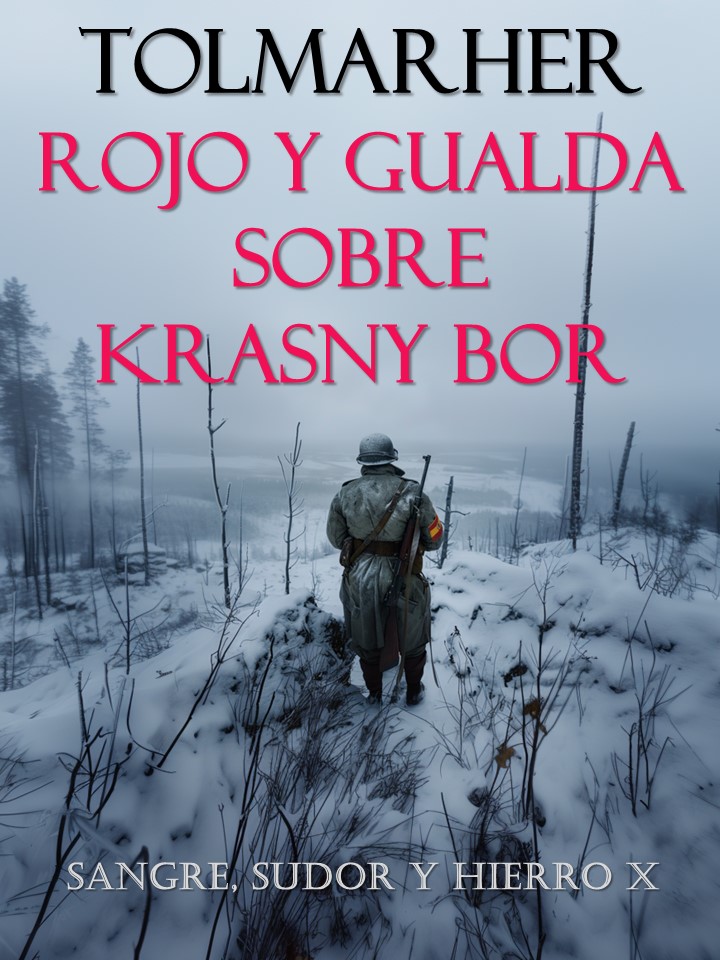
Tenth surrender of the historic saga "Blood, sweat and iron"
Red and Gualda about Krasny Bor is an epic and touching novel about the value, sacrifice and soul of Spain in one of the cruelest episodes of the Russian front during World War II.
February 1943. On the banks of the Ishora River, in the frosted lands of Leningrad, the Blue Division resists an overwhelming Soviet offensive. Overcome in number, frozen by winter, Spanish volunteers face history with honor as their only shield.
Between fire and snow, Spanish blood men - youth, veterans, believers and skeptics - fight not only to survive but to uphold an idea, a earth and a flag. Krasny Bor will not be a military victory but will be an immortal page written with blood, mud and silence.
In a sober and deeply human style, Tolmarher offers us a choral, tragic and light tale at once, where ideals are confronted with death and heroism are measured by the value of not giving up.
A novel that honors those who have been built up between ruins and snow under the Red and Gala. Because there was a day that Spain also fought in the East.
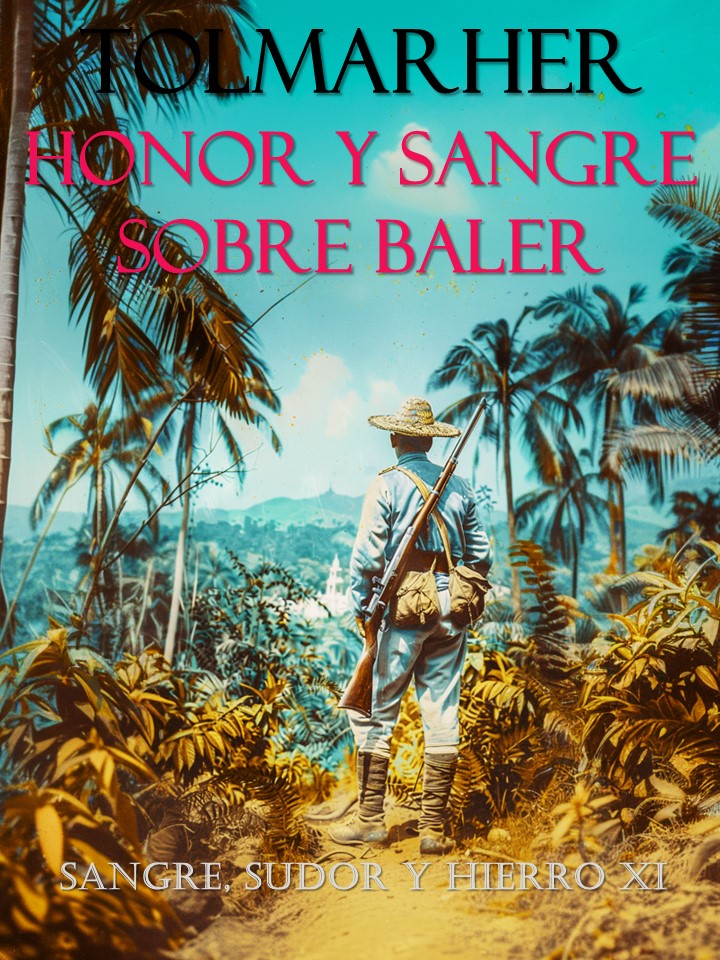
The Last of The Philippines
A church besieged.
A forgotten war.
A promise more powerful than death.
Juan de Estrada, a young lady with a good family, leaves behind the office's comfort to volunteer at the last border of the Spanish Empire. He does not seek glory but something deeper: to tell the truth of those who resist while everything is lost. But in the remote town of Baler, surrounded by jungle and enemy fire, fate awaits you with another plan.
Killed in the first few days of the siege, his soul was trapped between the walls of the Church and his fortress. Invisible and silent, Juan tells from beyond about his horror, his camaraderie and his partners' dignity and became a legend for resisting for 337 days without giving up, ignoring that Spain had already signed peace.
Under mud, hunger and bullets, the last men rise from 98. His names, his voices, his actions... John writes them with blood and spirit, till his last brother leaves his place that became his grave.
A tiresome and lyric historic novel that rescues human truth after myth.
Because sometimes the homeland isn't a flag.
It's a wall that doesn't leave.
It's a grave where she's still standing.
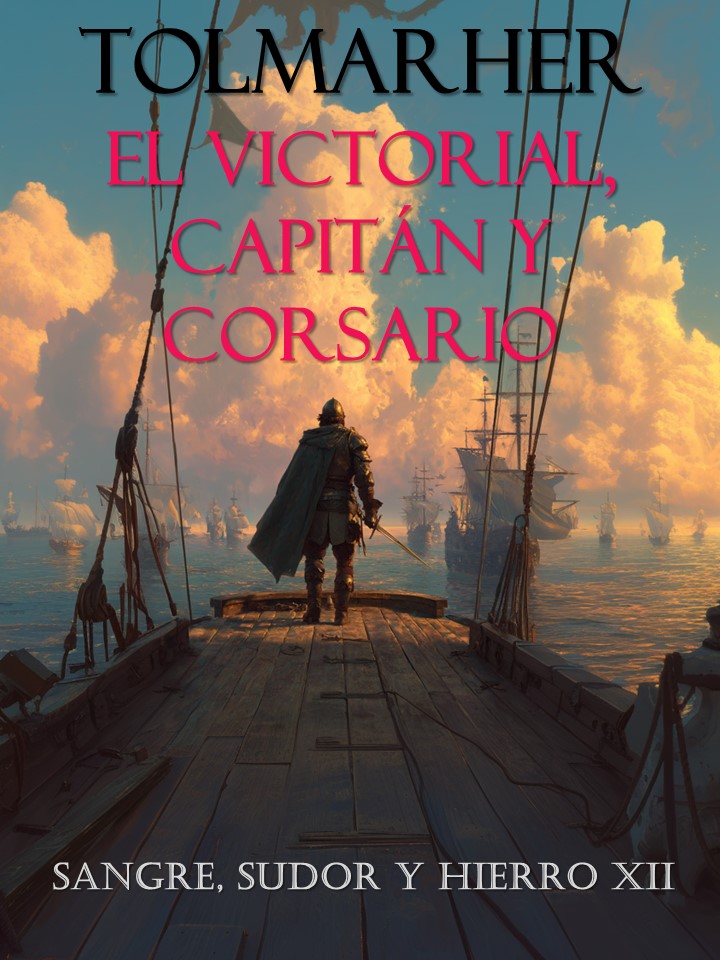
The Victorial: Captain and Corsaire
Series Blood, sweat and iron - Book XII
When Castile was still bleeding at its border and the sea was a field of battle, a boy grown up with the future King Henry III became captain of galley and master of vassals. His name was but boy. Your destiny, legend.
From the assault on Gijon to the coasts of Cornoules, from the palaces of the Holy Moon and the court of Paris to the fortresses of the naziri kingdom, The Victorial: Corsary and Spanish follows the true and epic life of a man who crossed the seas for his king, throws them for his honor and his soul for love.
Based faithfully on The Victorial of Gutierre Diez de Games, this novel relives with the pulse of best historic narrative the lives of one of the great forgotten capitals of Castile. A story of loyalty, sea, justice and passion, passing between storms and quiet, between glory and loss, between the rudder of war and his remaining voice.
but boy did not ask for glory.
He asked his story to be told.
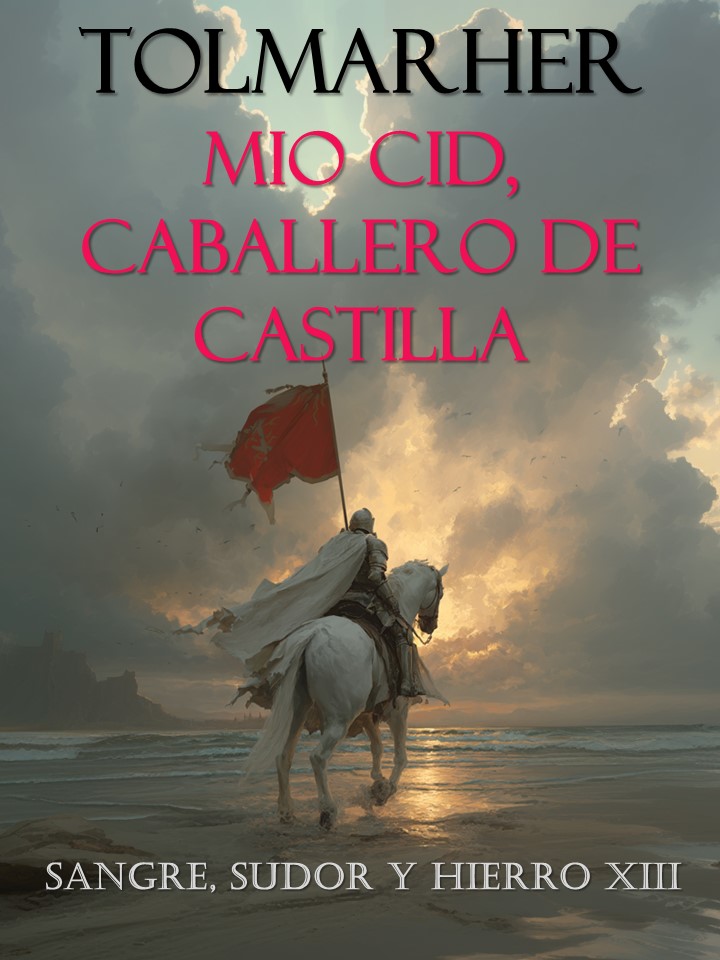
Mio Cid: Knight of Castile
Series Blood, sweat and iron - Book XIII
In a Castile torn by treason and war, the figure of a man who was more than a gentleman, more than a man, more than a soldier: Rodrigo Díaz de Vivar, the Champ Cid.
Failed by his king, beloved and hated by equals, Rodrigo forks his destiny at the edge of his sword, between impossible pacts with moors and Christians, between pallor intrigues and family betrayals. From the walls of Burgos to the hot sands of Valencia, his life is an iron and blood song, where glory is always bought at the price of pain.
His son will fall into the Plateau of Consuegra, his daughters will suffer the affront of Corpes, and even dead, Rodrigo will ride one last time to defeat his enemy. Because the Champion belongs to a different lineage: He who does not surrender even to his grave.
That's not the sweetened chronicle of a perfect hero but the grim and great account of a man of flesh and blood, whose will of iron and family tragedies made him an immortal legend.
A journey through ashes, oaths and blood, counted with the crudeness of the medieval gestures and the lyrism of the great epoids.
The Cid lives. The Cid dies. The Cid's still riding.
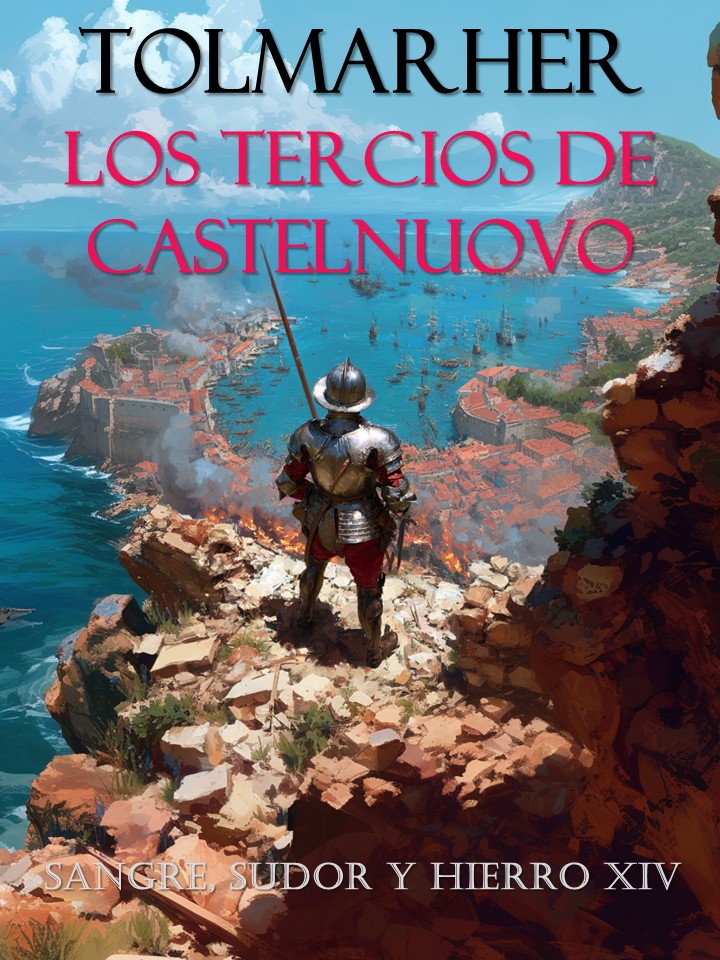
Castelnuovo's Tercios
Series Blood, sweat and iron - Book XIV
The year of the Lord from 1539. The Magnificent Soliman governs an empire that stretches beyond the confines of the horizon. Barbaroja, his sombre Admiral, drags after him the most tidal tide the Mediterranean has seen. And, with them, resisting as a rock lost in the middle of the ocean, only four thousand Spanish.
Four thousand men against an entire world.
The Tortios de Castelnuovo tells about the last defense of a convicted third, a resistance that no mortal would have thought possible. That's where kings and emperors parlay, and Jenizare born slaves, and corsaries that govern the sea, and Spanish soldiers who, hungry and wounded and abandoned by them all, have decided never to kneel.
The novel goes through the Istanbul palaces light with oil lights, the dark rooms of Yuste where Charles I felt the weight of the world, the cover of gallees that smell as a beret, sweat and prayer and finally Castelnuovo, a stone grave where every street is taken and lost a thousand times, where every man struggles till his name breaks into blood.
There's no salvation here.
No retirement here.
There's no dawn here that doesn't smell of gunpowder and burned flesh.
But there's something more powerful than life: the freedom to choose death.
The final words of Master Sarmiento are heard on these pages, and the ground tremor is felt as the Turkish mines devour the wall, and the final figure of less than a hundred men advanced against thousands because they have a breath and an oath. And as soon as the silence comes, that silence that only the great tragedies leave, remains the only thing that neither Soliman nor Barbaroja could conquer:
The memory.
Castelnuovo's Tercios are an iron and ash song, a glorious funeral, a flame that doesn't shut down.
A true story told with the crudeness, beauty and pics of a world that bleeds... but doesn't lean.
Because there are defeates that are crowns.
Because there are deaths that are foundations.
Because there are names that never die.
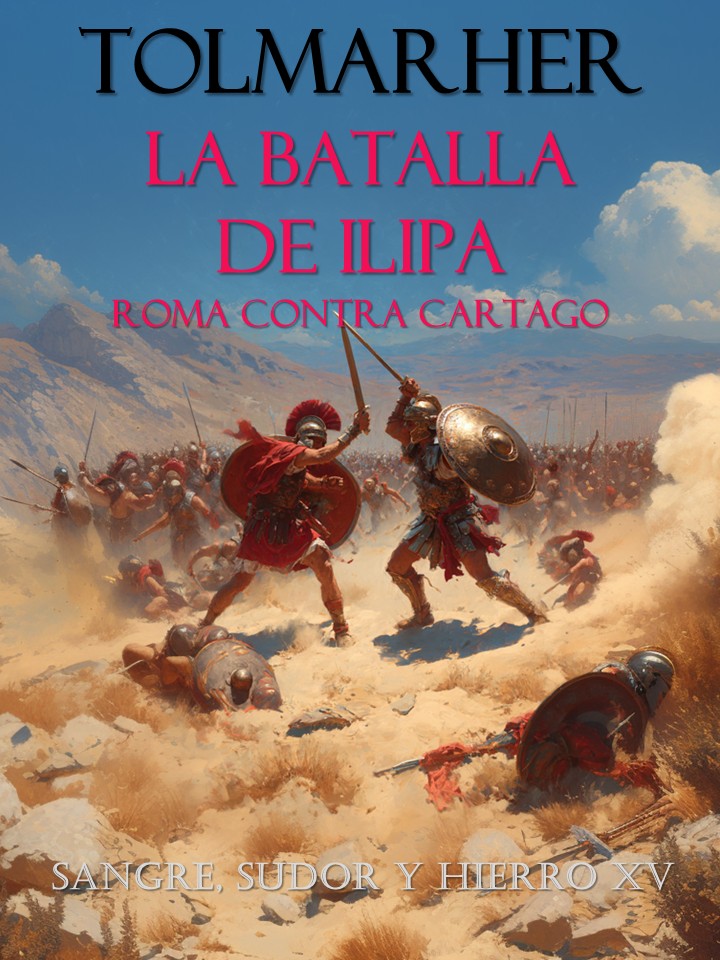
The Battle of Ilipa and Rome against Carthage
Series Blood, sweat and iron - Book XV
The greatest battle between Rome and Carthage on Spanish soil was held at Ilipa.
Under the unmerciful sun of Hispania, as the dusts of the dry hills blend with the blood of men, two worlds have an irreversible clash. Rome advances with iron discipline. Carthage resists with the pride of those who know that there will be no return.
Amidst that titanic conflict, anonymous soldiers hold the weight of History with their swords. Each step on the burned ground is a decision between duty and survival, between blind obedience and final dignity. The Legions put up their banners, the Cartaginese armies fight with fierceness, and the Hispanic tribes watch how their ground becomes the stage of a war that doesn't belong to them... and however will mark them forever.
That novel isn't just a tale of a battle but a brutal and human portrait of a time when the Mediterranean was built at a blow of steel. Honour, betrayal, sacrifice and destiny intertwines with an epoxy where every victory has a price and every defeat leaves scars that cross centuries.
Because before Rome dominated the world, there were fields of Hispania where the future was decided between shouting, dust and blood.
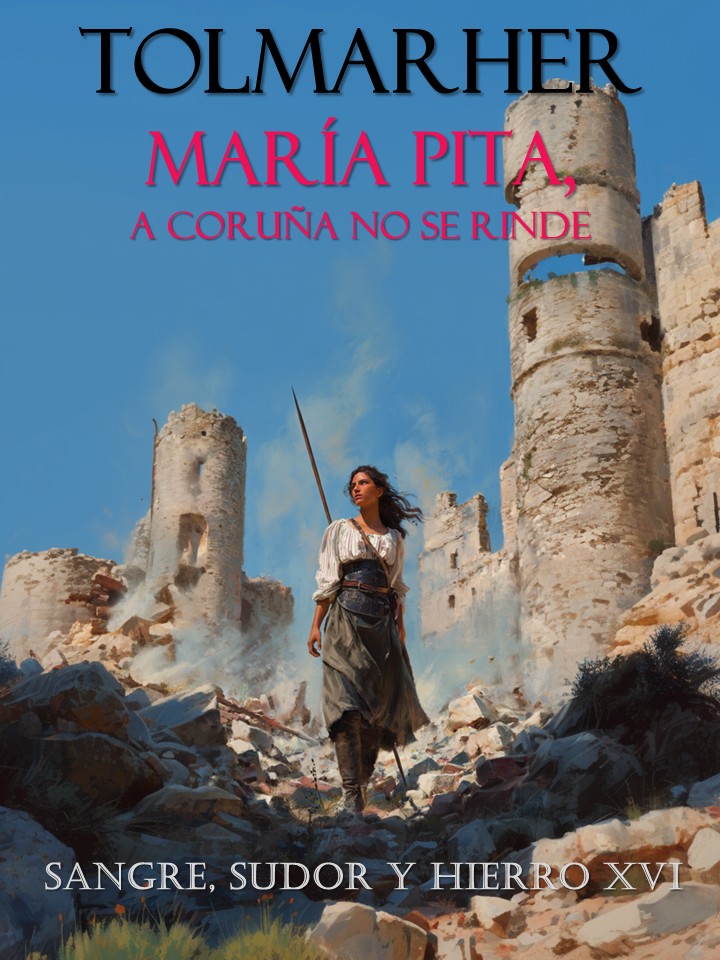
Maria pita, A Coruña doesn't give up
(Blood, sweat and iron)
In 1589, while the Spanish Empire still dominates the seas, an english fleet came to A Coruña with an intention to humiliate Spain where it hurts most: at its Atlantic border. Following the failure of the British Navy, Queen Elizabeth I hurl the Armed Contra convinced that the town will fall in days.
He won't.
A Coruña isn't an inextricable place. His defenses are few, his men few, his civilian population vulnerable. But his walls are more powerful than artillery: the determination of a people who refused to surrender.
Amidst the siege, Mary pita, a common woman put to war for her husband's death and for the certainty that there's nothing to lose. It's a heroin born to legend but a widow marked by pain, hardened by necessity and determined to resist when everything looks lost.
That novel rigor and crudely rebuilds A Coruña's defense of the British Armed Forces, showing the fight from within: doubt, fear, violence, loss and collective sacrifice. Without an empty idea and discourse, Maria pita, A Coruña doesn't give up how a town, his women and his men, held the wall with blood, sweat and iron.
Because some victories aren't held.
They survive.
An epic and human work, faithful to the spirit of the series Blood, sweat and iron, where history isn't told from the palaces but from the blood-stained stone of those who resisted.
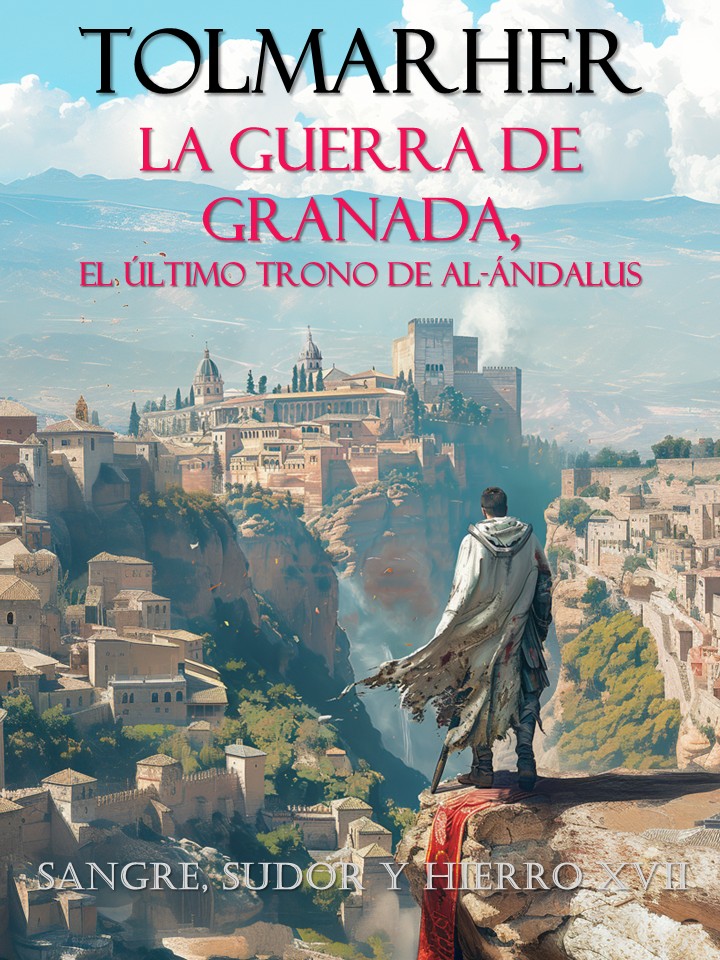
The War of Granada, The Last throne of Al- Ándalus
(Blood, sweat and iron)
The final throne of Al-Ándalus fell in the winter of 1492. But La Guerra de Granada: The last throne of Al-Ándalus isn't just the account of an conquest but the chronicle of a decade of iron, powder and calculation where they faced not only armies but visions of the world.
From the palate intrigues of the Alhambra to the cold determination of the Catholic Kings, from the stated ambition of Gonzalo Fernández de Córdoba to the grave shadow of Cisneros, from the broken honor of Boabdil to the emergence of a Visionaire called Colón, this novel rebuilds the end of a kingdom with historic rigor and epic breath.
There's no modern romanticism or caricature of defeat here. There's hunger, diplomacy, black powder, cold marble, unwavering faith and decisions that weigh more than a sword. War is waged with iron but decided with patience, ink and will.
Granada goes down.
Castile and Aragon sign up.
And the world, so far closed by walls, begins to open up to the sea.
A chronicle of kings and betrayments, of honor and calculation, of sunset and dawn.
The end of an age. The beginning of another.
An epic and human work, faithful to the spirit of the series Blood, sweat and iron, where history isn't told from the palaces but from the blood-stained stone of those who resisted.
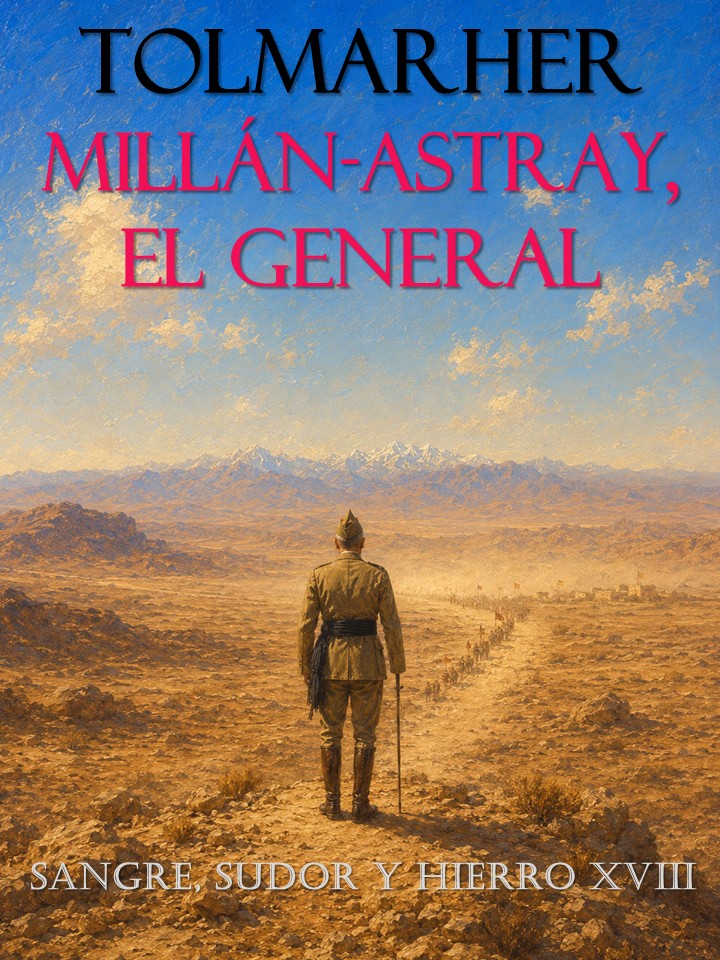
Millan-Astray, the General
(Blood, sweat and iron)
Spain has known many soldiers but few men have turned their own lives into a flag.
José Millán-Astray was born into an old, proud and wounded homeland, while the echo of the empire still resounds over the ports and military academies. From La Coruña to Toledo, from the Philippines to Africa, his destiny goes through discipline, faith, gunpowder and sacrifice. He's not an officer anymore. He can't be. It burns a serious idea of honor, a vocation of command and an relentless certainty: Spain does not hold back with memories but with men willing to pay for it with his blood.
The first wound to his homeland was found in the Philippines. In Morocco you will find the oven where men are tested. A new force, a military brotherhood capable of looking at death without bowing its head, begins to be thought of by dusts, ambushes and exhausted soldiers. Inspired by the Japanese search, by the Christian gentleman, by Spanish tradition and by the brutal Africa school, Millan-Astray will shape his immortal work: the Legion.
But to have found the Legion will be to build one more unity. That'll be creating a creed. A way to live, fight and die. A modern order of poor, fierce and voluntary soldiers united by discipline, fellowship, sacrifice and a mystique that still today scares as his men sing to the groom of death.
At his side will walk Francisco Franco, first African comrade, later an effective lieutenant, later head of state and inevitable shadow about his life. Between them a relationship of admiration, respect and distance will come about: two different men united by war and separated by the nature of power. One will be fire, symbol and word. The other, quiet, computation and command.
The life of Millan-Astray will not stop at glory. His body will be broken again and again by war: chest, leg, arm, eye. Each wound will bring him closer to his myth. Each mutilation will make more visible what his legionaries already knew: that the founder did not preach his sacrifice from far but from his own flesh. But there'll be injuries that don't bleed. Rita Gasset, Lisbon and the birth of Pilgrim will open up a more intimate, more painful and more difficult border to conquer than any African ravine.
Millan-Astray, the general isn't the comfortable story of a soldier discussed by those who haven't been wanting to understand. It's an epic portrait of a man who made honor a law, death a companion, word a weapon and legion a work intended to survive him.
A tragic hero. A founder. A mutilate who didn't ask for pity. A soldier who laughed at pain and walked to the end under the weight of Spain.
Because man dies.
But the play goes.