

Logo oficial THYDOMTHYDOMTHYDOM.COM
Sign inRegister free
Header image for the series Queen of Egypt

Editorial series

Queen of Egypt

Ongoing series · New installments on the way

4-book series

RuneHistorical
by Tolmarher Author
4.76 67 ratings
Web reading
Start the series

About this series

The historic novels of Queen of Egypt narrate the lives of Cleopatra VII, the last queen of Egypt, in an old world that bleeds among marbles, temples, betrayals and Roman legions. Cleopatra was not born to be a shadow at Alexandria. He was born into a dynasty marked by family blood, pallor intrigue and slow agony of a kingdom that still preserved gold, gods and memory but felt the claw of Rome on his neck. Between priests, eunuchs, Greek espies, mercenaries and brothers turned into enemies, you will learn that the throne will not be inherited: it will be conquered, defended and, if necessary, washed in blood. The arrival of Julio Caesar to Egypt will open up the first great abyss. Rome does not come into Alexandria as an ally but as a judge, an creditor and an executioner. Cleopatra, put out of power, will see at Caesar a threat and an opportunity: a man tired of beating, too great to obey the laws of others. Between them will be born an alliance made of intelligence, desire, necessity and political calculation. After Caesar's murder, Rome will become a wounded beast. The son of Cleopatra and the Roman dictator Cesarion will be hope, symbol and condemnation. Then will come Marcus Antonio: soldier, triumpher, conqueror, man of huge passions and broken destiny. With him, Cleopatra will try to build an Oriental power capable of resisting octavio, cold, patient and ruthless, that from Rome will turn propaganda into a more lethal weapon than swords. The series will advance to Accio as to a sentence: fleets burning, divided generals, lovers trapped between pride and ruin, silent gods and traitors bought. Cleopatra will be queen, mother, strategist and faraona. A woman forced to turn her body, intelligence, blood and legend into political weapons. Queen of Egypt's the chronicle of a dying world. With Cleopatra will fall the last independent Egypt, the last great Hellenistic monarchy and the illusion that Rome remained a republic. A saga of power, desire, treason and ruin. A dark, majestic and human Cleopatra: not a victim of history but a queen who tried to twist her with his own hands.

Tolmarher
Tolmarher Author
Follow

Books in this series

4 books

Cover of The eagle and the shadow of Farsalia
Book 1

The eagle and the shadow of Farsalia

4.9059 ratings
Web reading

First novel from the Queen of Egypt series The Roman civil war has been transformed into a field of corpses, dust and blood-stained eagles. JULY César has defeated Magnus, but his rest isn't allowed: as long as his enemy remains alive, Rome will be parted in two. That's why he commands his legions to leave the celebration and to pursue the defeated to the sea, to the last possible haven of a man who once seemed to own the world: Egypt. Alexandria receives Caesar under the majestic shadow of the light, among marble and perfumes and gold and fear. But the court of the young Tolomeus XIII committed an infamy that would change the destiny of the kingdom: He gave to his victor his cut head in an apelast pitcher, believing his friendship with Rome. Caesar doesn't see a gift. He sees a Roman killed as a supplicant, an old ally, his dead daughter's husband and a symbol of Roman grandeur demoted by foreign hands. While the Romans occupy a wing of the Royal Palace, the Egyptian throne becomes a trap of silk and poison. Tolemy's just a child surrounded by guardians who govern his name. Pothinus calculates, Teodoto disguise cowardice with words, Achillas measures the strength of swords and court officials attempt to convince Caesar to recognize the young king as the only sovereign of Egypt. But there's an absence that weighs more than all presences: Cleopatra. Expelled from Alexandria, still out of the picture, his name already divides the palace. Your enemies know that if you get to Caesar and talk to him, the whole board can change. The eagle and the shadow of Farsalia is the dark startle of Queen of Egypt: a novel of civil war, broken honor, poisonous diplomacy and old power, where Rome enters Egypt as an ally but as a judge, and as a creator and storm. Pompey goes into shade, and Caesar crosses the threshold of Alexandria and Cleopatra, still invisible, begins to govern the fear of all.
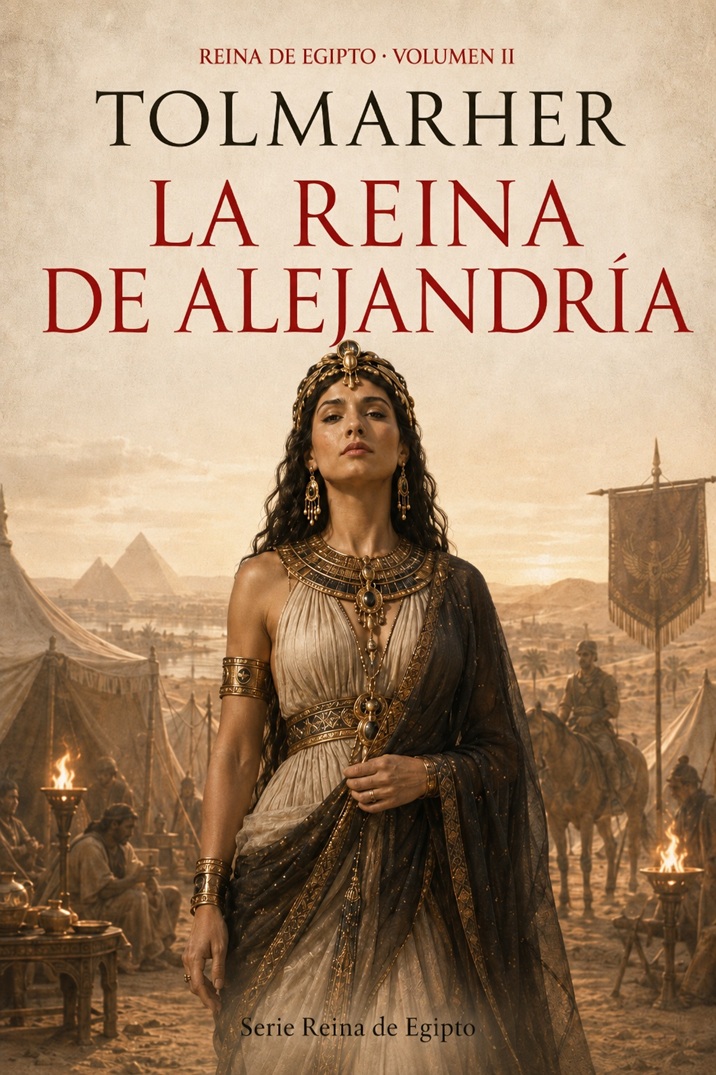
Cover of The Queen of Alexandria
Book 2

The Queen of Alexandria

4.6055 ratings
Web reading

The second novel from the Reina of Egypt Expelled from Alexandria by his brother Tolomeus XIII and by the men who rule in his name, Cleopatra survives in a lost camp between the sand, low fires and dry desert wind. He's got no palace, no throne and no cut. It retains only a small army of mercenaries, a few true loyalties and a will his enemies have been unable to destroy. But even far from Alexandria, Cleopatra keeps thinking as a queen. When the news of the entrance of Julio César into Egypt and the murder of Pompey Magnus arrives, Cleopatra understands that the fate of the kingdom has just opened a crack. Pothinus, Teodoto and Achillas will try to convince the Roman winner to recognize Tolemy as his only sovereign. If Caesar hears them without seeing her, Cleopatra will be reduced to an exiled rebel, an uncomfortable note at the margins of history. That's how she's planning an unworthy and bold plan: she's going into her own palace hidden inside a carpet, and she's been moved by Apolodoro through the night port of Alexandria. Between black water, torches, bought guards, moist wood, beret and light lights above the sea, the queen becomes merchandise to get his name back. The operation scatters the disaster at every step. The police at Tolomeo suspect, officials check seals, the Romans mistrust and Apolodor have to lie with Cleopatra's life wrapped at his feet. But the queen holds her imprisonment and fear and humiliation with only one certainty: if she doesn't get to Caesar, Egypt will be given to cowards. When it finally emerges before the Roman general, Cleopatra does not appear as a supplicant but as a sovereign. Without a crown, marked by the pain of the carpet and surrounded by enemies, takes control of the conversation. Caesar, first bewildered and later fascinated, finds that the woman to whom Pothinus intended to erase isn't a desperate rebel but a political intelligence capable of offering him something more valuable than obedience: Egypt. The Queen of Desert is an impossible return novel. The story of an expelled queen who crosses the hidden night as a burden to get back into the centre of power. A work of audacity, danger, desire and political calculation, where Cleopatra ceases to be a shadow feared by his enemies and becomes, in his eyes, the only force capable of disputing the soul of Egypt.

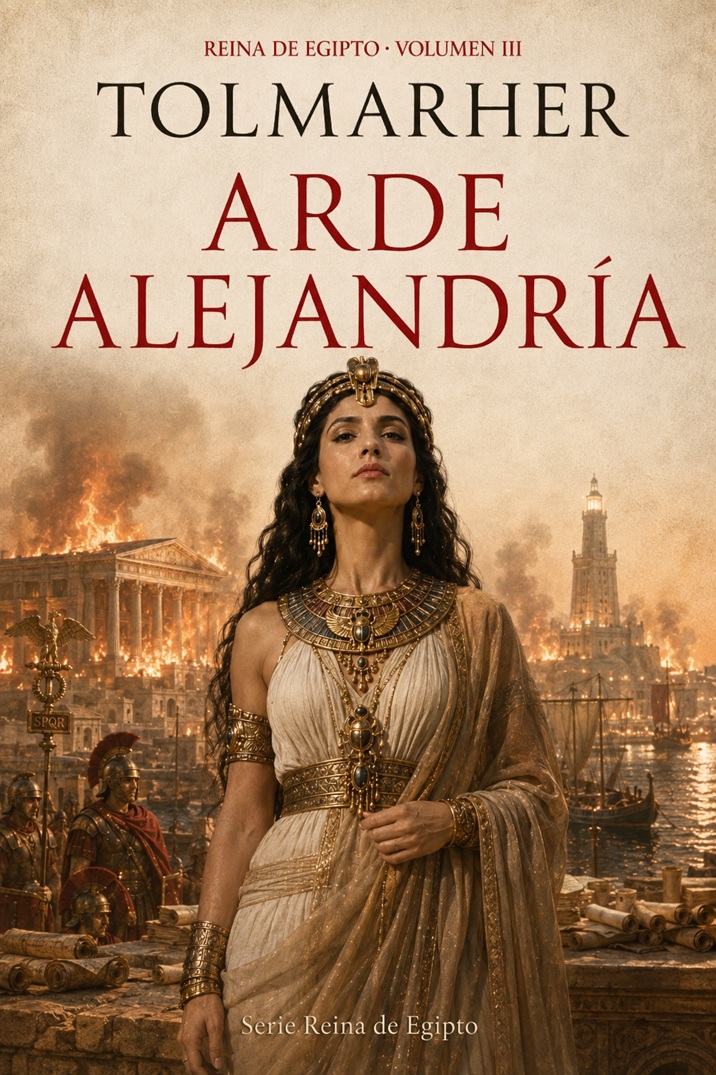
Cover of Arde Alexandria
Book 3

Arde Alexandria

4.8051 ratings
Web reading

Arde Alexandria The third novel from the Queen of Egypt Cleopatra has returned to the Royal Palace of Alexandria but to come back doesn't mean to reign. The court remains divided between Caesar and Tolemy XIII and the men who rule in the shade. Pothinus conspires, Teodoto sharpenes words, Achillas moves troops and the young king remains a crown manipulated by his hands. In the midst of that palace filled with closed doors, Cleopatra should turn his presence into power before his enemies re-expel her, or decide to kill her. Julio César, trapped in a town that doesn't fully control, tries to impose Roman order on an Egyptian court of intrigue, pride and poison. But Cleopatra doesn't agree to be treated as a protected or as a useful piece on his board. The ritual intimacy of his baths challenges him without giving up a gesture of authority: half naked, surrounded by steam, oils and servants, forces his conqueror of Rome to negotiate with his master. Seduction exists but not as surrender. It's politics, challenges and strategies. The tension's up at the port. The troops of Caesar and the forces of Tolomeus clumps between docks, ships, warehouses and narrow streets. To prevent the enemy fleet from closing the port, the Romans resort to fire. But Alexandria's made up of wood, flax, oil, bale and papyrus. The flames extend, reach the deposits linked to the library and devour thousands of rolls. Cleopatra arrives in time to see how a part of the memory of the world burns. Before the fire, the covenant between Caesar and Cleopatra crumbles. She challenges him not only a material loss but a wound to human thought. Between smoke and ashes and chartered papyrus, Caesar understands that Egypt isn't only a kingdom that can manage, use or submit: it's a civilization capable of accusing him from his ruins. While the town still smells of burned papyrus, Pothinus's conspiracy remains exposed. The eunuch, who for years has ruled after Tolohis, tries to justify his actions by invoking his loyalty to Egypt. But Caesar's no longer ready to tolerate betrayals inside his palace. In the throne room, under immense and frightful holy columns, Pothinus kneels on marble and receives a sentence as short as relentless. Arde Alejaria is the novel of fire, intrigue and first great political blood. Cleopatra claims as queen within the palace, Caesar finds that Egypt cannot be reduced to another conquest, the Library burns as a symbol of an irreparable loss and Pothinus dies without the war ending. Because his execution does not bring peace: it opens up a blood space from which Cleopatra finally begins to govern.

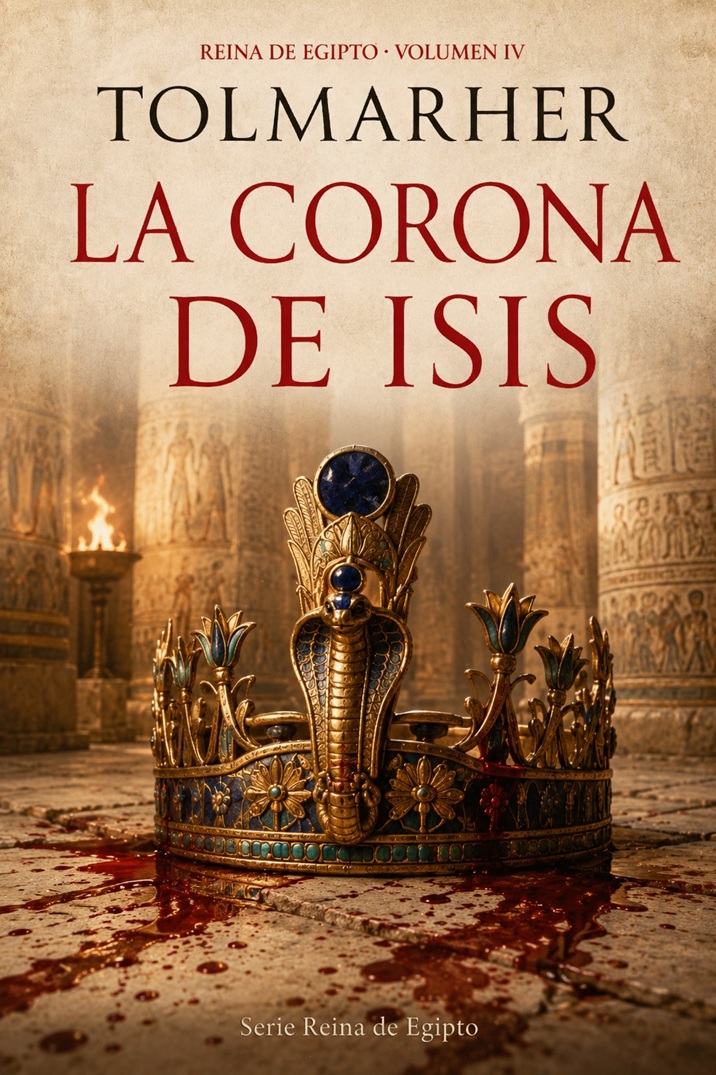
Cover of The Crown of Isis
Book 4

The Crown of Isis

4.5248 ratings
Web reading

Cleopatra has survived exile, palace conspiracies, the fire of Alexandria, and those who sought to reduce her to a shadow. Now she must accomplish something even harder: become a queen in truth. Ptolemy XIII, her brother and rival, is expelled from Alexandria under a veneer of dignity. The boy pharaoh leaves the city walls with a doomed army, bound for the desert and a war that may become his death sentence. Cleopatra watches him depart without tears. In Egypt, compassion can be as dangerous as betrayal. With the path to the throne cleared, the most important battle begins: the battle for legitimacy. In a temple covered in hieroglyphs, amid incense, gold, and thousands of kneeling worshippers, Cleopatra is proclaimed the incarnation of Isis and crowned Egypt's sole sovereign. Julius Caesar watches the ceremony from an uneasy position: his soldiers made that crown possible, yet the ritual is designed to show Egypt that Cleopatra does not rule by Rome's grace. She is queen by the will of the gods. Then they both leave Alexandria. Aboard the royal barge, Cleopatra and Caesar travel the Nile past ancient temples, fertile fields, villages, priests, and crowds acclaiming their queen. The voyage is an inspection of the kingdom, a display of power, and an intimacy increasingly difficult to separate from politics. Cleopatra reveals Egypt's true wealth to Caesar. Not only its grain. Not only its gold. But the Nile, its ports, its routes to the East, its temples, its memory, and a civilization that has survived for thousands of years every man who tried to possess it. And beside the river, a dangerous idea is born. Rome in the west. Egypt in the east. Caesar's legions. Cleopatra's wealth. Two worlds joined within a structure of power capable of ruling the entire known world. Perhaps even beneath a single crown. The Crown of Isis is a novel of power, sensuality, religion, and boundless ambition. It is the story of a woman who stops fighting to reclaim her throne and begins to wonder how far she might extend it. Cleopatra is already Queen of Egypt. Now she begins to imagine something far greater.